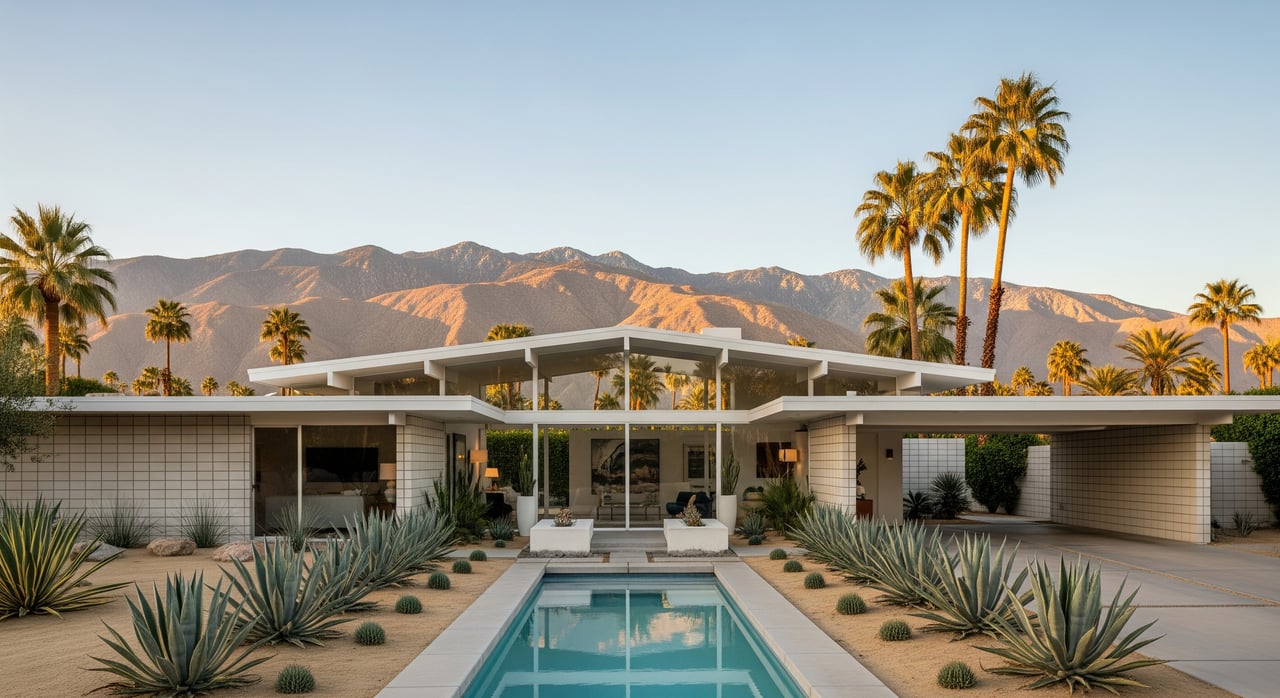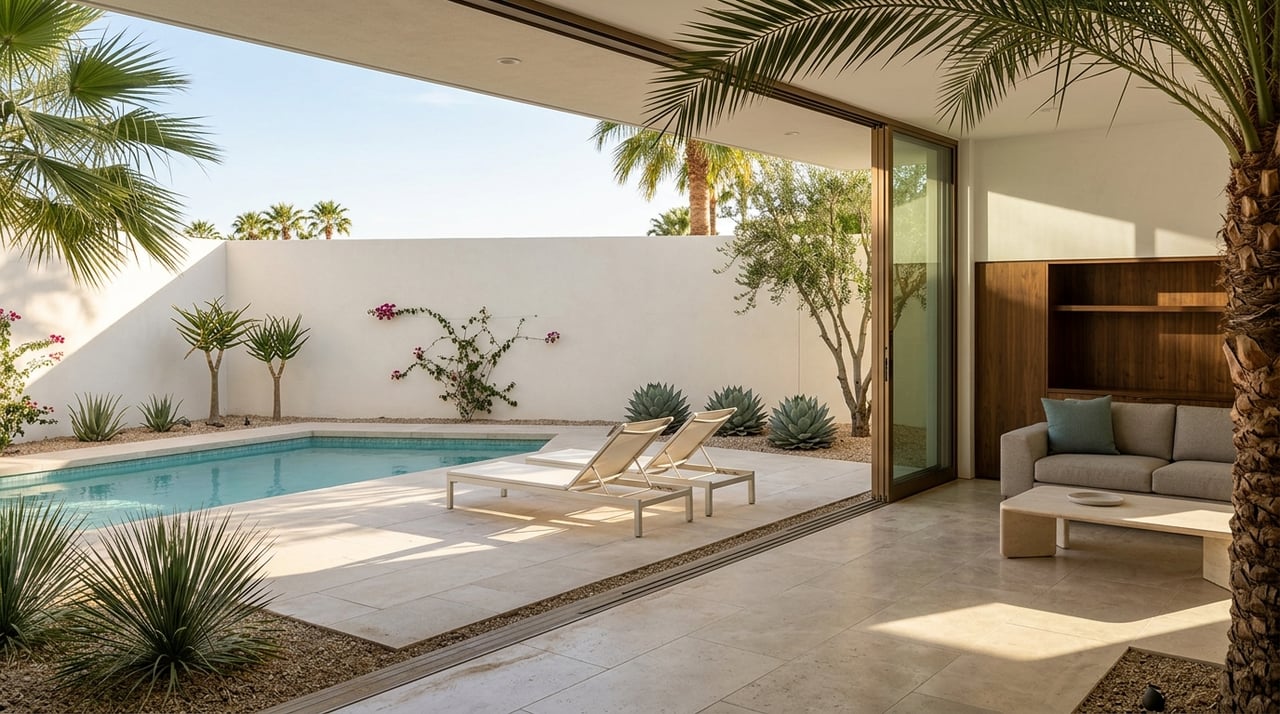
Wondering whether a Palm Desert seasonal rental can be a smart investment? It can, but this is not a market where you can rely on broad vacation-rental assumptions and hope the numbers work. If you are considering a purchase here, you need to understand both the city’s rules and the resort-style demand cycle that shapes income potential. Let’s dive in.
Why Palm Desert works differently
Palm Desert behaves more like a seasonal resort market than a steady year-round rental market. That matters because your revenue is likely to be concentrated in late winter and spring, not spread evenly across all 12 months.
Current AirROI estimates for Palm Desert show about $30,733 in annual revenue, a $389 average daily rate, 31.9% occupancy, and a 72-day average booking lead time. The same data shows March as the strongest revenue month and September as the weakest, with rates peaking in April and bottoming in August.
That pattern tells you something important as an investor. In Palm Desert, success depends on planning ahead for the busy season and protecting your downside during the slow season.
Seasonal demand shapes your strategy
If you are underwriting a seasonal rental in Palm Desert, timing matters almost as much as the property itself. Guests tend to book this market well in advance during peak months, which means pricing and calendar strategy need to be set early.
AirROI estimates that April stays are booked about 113 days in advance, while summer stays book much closer in, at about 24 days ahead. Spring as a whole averages an 82-day booking lead time, compared with about 26 days in summer.
Regional vacation-rental data from Visit Greater Palm Springs supports the same trend. Paid occupancy for professionally managed vacation-rental homes rose from 23% in December 2025 to 33.8% in January 2026, 47.7% in February 2026, and 51.6% in March 2026.
For you, the practical takeaway is simple: do not wait until high season arrives to set rates, block personal-use dates, or line up vendors. By then, much of the most valuable demand may already be booking elsewhere.
Know the legal line: short-term vs seasonal
One of the most important details in Palm Desert is how the city defines a short-term rental. A short-term rental is a privately owned residential dwelling rented for 27 consecutive nights or less.
That means a classic short-term rental strategy and a 28-plus-night seasonal lease strategy are not the same thing. If your goal is to combine personal winter use with income, this distinction should be part of your planning from day one.
The city states that stays of 28 consecutive nights or more are not subject to TOT or TBID. That can materially affect your financial model, especially if you are leaning toward longer seasonal stays rather than frequent turnover.
Palm Desert permit rules investors must check
Before you get excited about furniture packages or projected nightly rates, confirm that a property can legally operate the way you intend. Palm Desert requires every short-term rental to have an active permit.
The city’s application or renewal fee is $29, and permits must be renewed annually. Renewals must be filed 30 calendar days before expiration, and if ownership changes, the new owner must submit a new application.
Zoning is a major screening issue. According to the city, short-term rentals are prohibited in R1 and R2 zones except for on-site owner permits, while RE and R3 are eligible for on-site or off-site owners. In HPR and PR zones, an HOA approval letter or on-site owner status is required.
The city also says investors should use the eligibility map before applying. That makes zoning review one of the first steps in your acquisition process, not something to check after closing.
HOA approval can make or break a deal
If the property is within an HOA, city approval is only part of the picture. Palm Desert requires an annual HOA approval letter stating the owner name, property address, current date, and confirmation that short-term rentals are allowed in the community.
The city is also clear that HOA or condominium rules remain controlling and are not overridden by the city’s short-term rental rules. So even if a property looks viable on paper, HOA restrictions can still shut down the strategy.
For investors looking at condominiums or planned communities, this is a critical due-diligence item. Ask for current HOA documents and written confirmation early.
Not every casita or ADU qualifies
Accessory space needs careful review in Palm Desert. The city says an ADU or JADU with full living amenities and a separate entrance from the primary home cannot be rented as a short-term rental.
Apartments and timeshares are also excluded. If you are evaluating a home because it has a detached casita or flexible bonus space, be sure the legal use matches your income plan.
Operating rules affect real ROI
A Palm Desert seasonal rental is not a passive asset if you are using the short-term model. The city’s operating rules create real staffing and management requirements, and those costs belong in your underwriting.
Before occupancy, the operator must meet and greet the responsible person, collect identification, provide the Good Neighbor Brochure and short-term rental regulations, and obtain a formal acknowledgment. During operation, the host or operator must be available 24/7 and respond to complaints within 30 minutes.
Advertising must include the permit number and required disclosures. Parking must be fully on site, trash cannot be visible from public view, and noise audible outside the property is prohibited from 10 p.m. to 10 a.m.
These are not minor details. They shape whether a self-managed approach is realistic or whether you will need professional support.
Occupancy and stay limits matter
Palm Desert also limits how the property can be used. The minimum rental duration is three days and two nights.
Maximum overnight occupancy is two people per bedroom, with daytime guest limits tied to bedroom count. If the rental is an on-site owner arrangement, one bedroom is considered occupied by the owner, which reduces guest capacity.
This matters when you compare properties. A home with an appealing layout may still underperform if the legal bedroom count, owner-use structure, or parking setup limits its earning potential.
Taxes and filings to include in underwriting
Too many investors focus on nightly rate and ignore the city’s tax structure. In Palm Desert, the total lodging tax load is 12%, made up of 11% city TOT and a 1% Greater Palm Springs TBID assessment.
The taxable base includes more than just rent. The city says cleaning fees, reservation fees, extra-person fees, pool-heating fees, damage-waiver fees, and similar charges are also taxable.
Monthly returns are required even when there is no rental activity. The city also notes that Airbnb collects only the 11% TOT under its agreement, which means owners still need to handle the 1% TBID and filing requirements.
If you are comparing a short-term model with a 28-plus-night seasonal lease model, this is one of the biggest financial distinctions to review.
Compliance risk is too expensive to ignore
Palm Desert takes enforcement seriously. Operating without a valid permit can trigger a $5,000 first citation, with additional citations for every day the property is rented or advertised.
Operational violations can bring $1,000, $3,000, and $5,000 citations, along with a possible two-year permit revocation. The city also says inaccurate bedroom counts can lead to fines or permit denial, and unresolved code cases, liens, or unpaid city charges can block issuance or renewal.
For investors, this means compliance is part of asset protection. A property that cannot be operated cleanly and consistently is not truly investment-ready.
Compare Palm Desert to nearby markets
It also helps to view Palm Desert in the context of nearby Coachella Valley resort cities. Third-party market estimates suggest Palm Desert sits in the middle of the pack rather than at the top.
AirROI estimates show about $55,542 in annual revenue for Palm Springs, $44,263 for La Quinta, $28,729 for Indian Wells, and $18,338 for Rancho Mirage. Palm Desert, at about $30,733, tracks below Palm Springs and La Quinta, roughly near Indian Wells, and above Rancho Mirage.
Booking lead times across these cities mostly fall in the 58- to 80-day range. That supports the idea that Coachella Valley investors should think in terms of planned seasonal demand, not last-minute occupancy fixes.
What makes a property rental-ready
In Palm Desert, rental-ready means more than attractive design and a pool. A viable investment should clear the city’s zoning and HOA rules, match its legal bedroom count, support on-site parking, and be manageable within the city’s guest-contact and response requirements.
The data also suggests that the ideal operating setup is turnkey and service-oriented. AirROI estimates an average stay of about 5.9 nights in Palm Desert, and the city requires a minimum stay of 3 days and 2 nights.
That combination favors homes with dependable housekeeping, quick maintenance response, and a management plan that can support rule-based hospitality. In other words, the property needs to function well operationally, not just look good in photos.
A simple ROI framework for Palm Desert
When you evaluate an investment here, use at least three scenarios: peak season, shoulder season, and low season. Palm Desert’s highs and lows are too pronounced to rely on a flat annual average.
AirROI places peak season in February, March, and April, with average monthly revenue around $7,104, occupancy around 46.8%, and daily rates around $468. Low season, defined as July, August, and September, averages about $2,901 in monthly revenue, 25.8% occupancy, and a $335 daily rate.
A practical underwriting model should start with gross rental revenue, then subtract Palm Desert’s 12% lodging tax load, along with cleaning, management, utilities, pool service and heating, insurance, HOA dues, maintenance, supply replacement, furnishings refresh, and financing costs. Since the city includes cleaning and pool-heating fees in the taxable base, those line items deserve special attention.
The bottom line for investors
Palm Desert can be a compelling seasonal-rental market, but it rewards careful buyers. The best opportunities tend to be properties that fit the city’s zoning and HOA rules, support smooth operations, and are purchased with a realistic plan for winter and spring demand as well as summer softness.
If you are considering a Palm Desert investment, the smartest first step is not chasing the highest advertised nightly rate. It is confirming that the property can legally operate, modeling the full cost structure, and choosing a strategy that matches how this market actually books.
If you want a local, measured perspective on Palm Desert investment opportunities, seasonal leasing strategy, or buyer due diligence, Roger Gendron can help you evaluate the details with clarity.
FAQs
What counts as a short-term rental in Palm Desert?
- In Palm Desert, a short-term rental is a privately owned residential dwelling rented for 27 consecutive nights or less.
Are 28-night seasonal stays taxed the same way in Palm Desert?
- No. The city states that stays of 28 consecutive nights or more are not subject to TOT or TBID.
Do Palm Desert short-term rentals need an HOA approval letter?
- Yes, if the property is in an HOA community, the city requires an annual HOA approval letter confirming that short-term rentals are permitted.
Can an ADU be used as a short-term rental in Palm Desert?
- Not necessarily. The city says an ADU or JADU with full living amenities and a separate entrance from the primary home cannot be rented as a short-term rental.
What lodging taxes apply to Palm Desert short-term rentals?
- Palm Desert states a 12% total lodging tax load, made up of 11% TOT and 1% TBID, and the taxable base includes charges like cleaning and pool-heating fees.
How seasonal is the Palm Desert rental market for investors?
- Current market data points to stronger demand in late winter and spring, with March as a peak revenue month and summer months generally performing more softly.