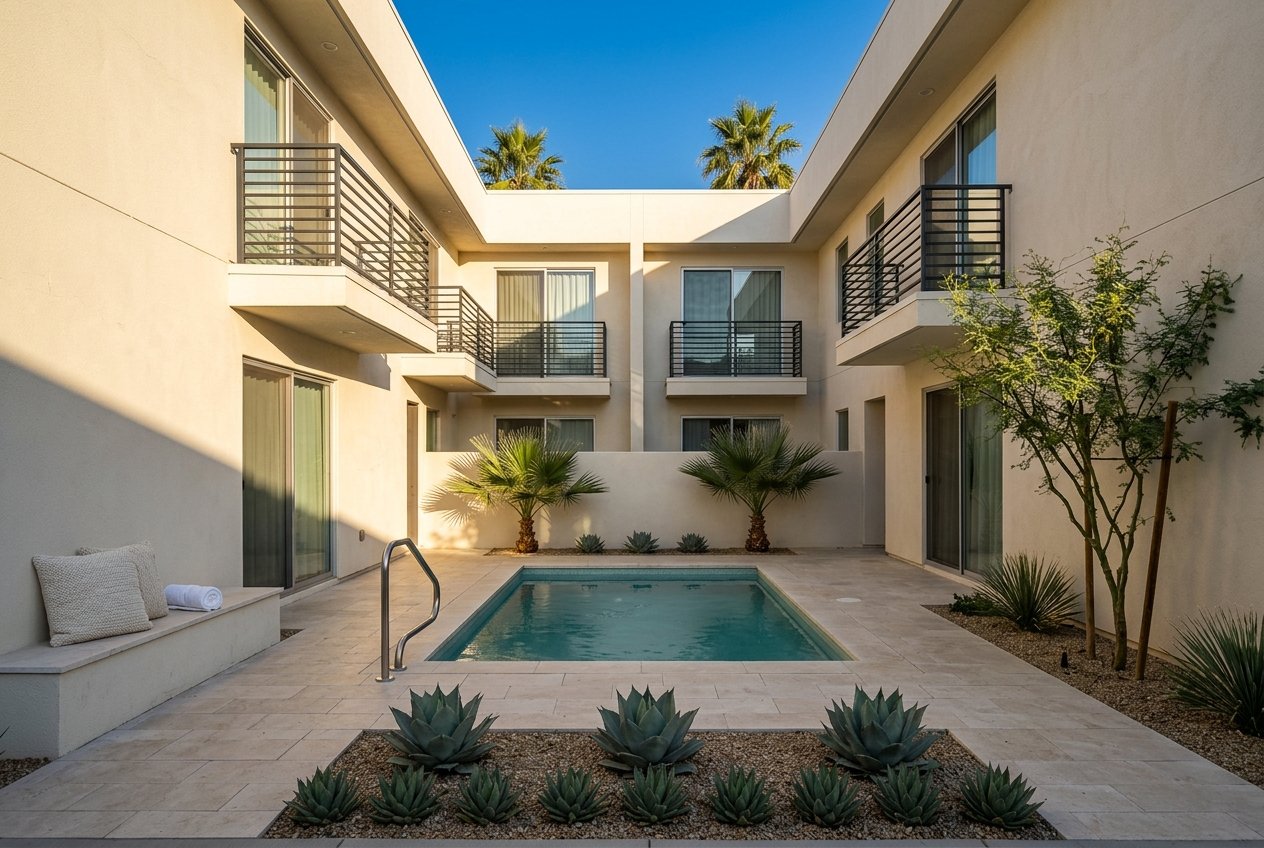
Choosing between a Palm Desert condo and a detached desert home is not just about square footage. It is about how you want to live, what you want to maintain, and how your monthly costs will really look after closing. If you are weighing convenience against control, or lifestyle against long-term upkeep, this guide will help you sort through the tradeoffs with more confidence. Let’s dive in.
Why this choice matters in Palm Desert
Palm Desert offers a wide range of housing, from condominiums and single-family neighborhoods to high-end estates. The city also highlights walkable neighborhoods, recreation, and a year-round resort lifestyle, which helps explain why both condos and detached homes attract strong interest here.
That matters because your decision is not just about buying a property type. It is also about choosing the ownership model that best fits your day-to-day routine, your budget, and your plans for using the home.
Palm Desert price gap to know
In the March 2026 Greater Palm Springs Realtors Desert Housing Report, Palm Desert's average-size attached home was priced at $518,761. The average-size detached home was $734,922, creating a difference of about $216,000.
That gap can be meaningful if you are deciding how much cash to put down, how much home you want to carry, or whether you would rather preserve room in your budget for travel, furnishings, or updates. It also shows why condos often stay in the conversation for downsizers, seasonal buyers, and buyers looking for a more manageable entry point in Palm Desert.
Palm Desert also posted the highest unit sales in the valley in that same report, with 149 sales. In practical terms, that suggests buyers often have a real selection of both attached and detached options to compare.
When a Palm Desert condo makes sense
A condo can be a smart fit when you want a lower upfront price, shared amenities, and less direct responsibility for exterior maintenance. In a city shaped by resort living and recreation, that can be especially appealing if you want a lock-and-leave property or a simpler second-home setup.
Many condo communities also offer a more structured ownership experience. Common areas and facilities are typically owned or operated by an owners' association, which can support convenience but also comes with rules, budgets, and shared decision-making.
Condo advantages to consider
If you are leaning condo, these are often the biggest benefits:
- Lower purchase price than a detached home in Palm Desert
- Shared amenities and common facilities
- Less exterior upkeep handled directly by you
- A practical option for seasonal use or downsizing
- Access to communities designed around walkability and recreation
For many buyers, that combination creates a more relaxed ownership experience. You may spend less time thinking about roofs, exterior surfaces, or shared landscaping and more time enjoying the home.
What condo ownership really includes
In a California common interest development, the association generally maintains the common area. Each owner typically maintains the separate interest and any exclusive-use area tied to that unit.
That distinction is important because “low maintenance” does not mean “no maintenance.” You still need to understand what belongs to the HOA, what belongs to you, and how future repairs are funded.
Key condo documents to review
Before buying an attached property, these documents deserve close attention:
- CC&Rs
- Bylaws
- HOA budget
- Reserve study
- Disclosure of any special assessments
These documents govern rights, assessments, common facilities, and financial responsibilities within the community. They are central to understanding not only the lifestyle, but also the financial health of the association.
HOA dues and reserves matter
HOA dues are usually paid separately from your mortgage. They can range from a few hundred dollars to more than $1,000 per month.
That means the lower purchase price of a condo does not always equal a lower monthly cost. You will want to evaluate dues alongside your mortgage, insurance, and any community restrictions that may affect how you plan to use the property.
Reserve planning also matters. California HOA reserve guidance notes that major common-area items such as roofs and pavement need to be funded over time to avoid deferred maintenance and help protect long-term property values.
Condo insurance is still your job too
The condo association generally insures the building structure and common areas. As the owner, you still need coverage for the interior of your unit and owner-responsible improvements.
That is why reviewing the HOA's insurance structure early is so important. It helps you understand what is already covered and what needs to be part of your own insurance planning.
When a detached desert home makes sense
A detached home is often the better fit when you want more privacy, more control, and fewer association rules. If your ideal Palm Desert lifestyle includes a greater sense of autonomy, a detached property may feel like the more natural choice.
That added control usually comes with added responsibility. Instead of sharing many exterior obligations through an HOA, you are more directly responsible for upkeep, repair planning, and ongoing maintenance decisions.
Detached home advantages to consider
A detached home may be the better match if you value:
- More privacy
- Greater control over the property
- Fewer shared rules and community restrictions
- More independence in maintenance decisions
- A lifestyle less shaped by HOA oversight
For some buyers, especially those planning long stays or full-time use, that control is worth the higher entry price and added maintenance responsibilities.
The upkeep tradeoff with a house
Detached-home buyers do not automatically have an HOA. Even so, homes still need to meet local property-maintenance standards.
Palm Desert's code compliance program regulates the use and maintenance of private property, and homes are expected to be kept consistent with neighborhood standards. So while you may have more independence, you also need to budget for maintenance, insurance, and long-term repairs with fewer shared systems in place.
Short-term rentals can affect your choice
If seasonal rental income matters to you, this is one of the most important parts of the decision. In Palm Desert, a short-term rental is defined as a privately owned residential dwelling rented for 27 consecutive nights or less.
The city requires a permit before advertising or renting a short-term rental. For properties in HOA communities, the city also requires an annual HOA approval letter confirming that the community allows short-term rentals.
Why rental rules matter for condo buyers
If you are considering a condo as a second home and hope to rent it seasonally, community rules can be just as important as city rules. A lower-maintenance property may look ideal on paper, but rental restrictions can change the math quickly.
That is why it is important to verify both city requirements and HOA allowances before you buy. The right property for personal use is not always the right property for flexible rental use.
Compare the real monthly picture
The best choice usually becomes clearer when you compare total ownership costs, not just list price. A condo may lower your upfront cost, but HOA dues, insurance, and possible assessments should be part of the conversation from the start.
A detached home may cost more to buy, but it can offer more control and fewer shared restrictions. The tradeoff is that you need to plan for maintenance, repair reserves, and property standards more directly.
A simple way to decide
If you are still torn, focus on the questions that shape daily ownership:
- Do you want a lower purchase price or more private space?
- Would you rather share maintenance responsibilities or handle them yourself?
- How comfortable are you with HOA rules and monthly dues?
- Do you want shared amenities?
- Are you hoping to use the property for short-term rentals?
- How important is lock-and-leave convenience?
Your answers often point to the better fit faster than a feature list does. In Palm Desert, both options can work beautifully. The key is matching the property type to how you actually plan to live.
If you want help comparing condo communities, reviewing the practical costs of ownership, or narrowing the right Palm Desert fit for your next chapter, Roger Gendron can help you evaluate your options with local insight and careful guidance.
FAQs
What is the price difference between a Palm Desert condo and house?
- In the March 2026 Greater Palm Springs Realtors Desert Housing Report, Palm Desert's average-size attached home was $518,761 and the average-size detached home was $734,922, a difference of about $216,000.
What do HOA dues usually cover in a Palm Desert condo?
- In a California common interest development, the association generally maintains the common area, while you typically maintain your separate interest and any exclusive-use area tied to your unit.
What Palm Desert condo documents should you review before buying?
- The key documents are the CC&Rs, bylaws, budget, reserve study, and any disclosure of special assessments.
What insurance do you need for a Palm Desert condo?
- The association generally insures the building structure and common areas, while you still need coverage for the interior of your unit and owner-responsible improvements.
What maintenance responsibilities come with a Palm Desert house?
- A detached home usually gives you more control, but you are more directly responsible for upkeep, insurance, repair planning, and meeting city property-maintenance standards.
Can you use a Palm Desert condo or house as a short-term rental?
- Palm Desert requires a permit before advertising or renting a short-term rental, defined as 27 consecutive nights or less, and HOA properties also need an annual HOA approval letter showing the community allows short-term rentals.